
About Phase TWO / hi chroma
Modularity. I’ve been thinking about the idea of adding modularity to the drawings for about as long as I’ve been making them. There’s a real interest in trying to work out systems for the cohesive break up of the image plane into modular components, or using multiple components to create new forms from the sum of multiple parts.
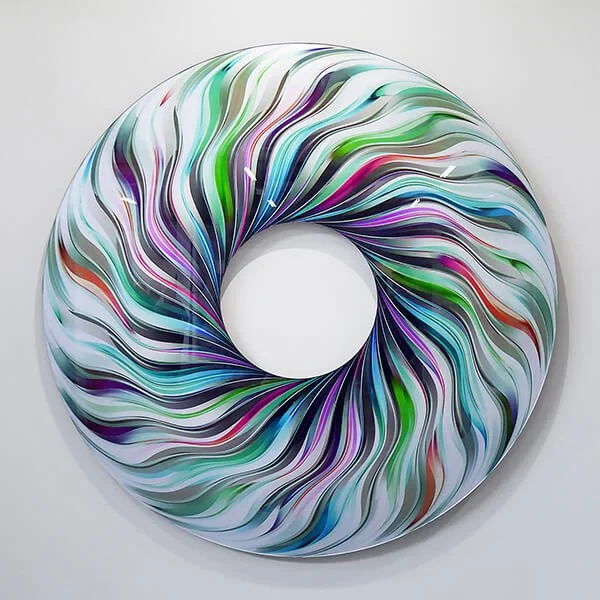
In the case of the Millefiori series this modularity was built up from the idea of concentric spheres or pebbles laid out in expanding rings. There’s a beautiful set of pebbles laid out in the first floor reception rooms at Kettle’s Yard, the site of Tate director Jim Ede’s collection and life, where objects and art works are blended within a value system that seems able to attribute value equally to both found and made objects. If you haven’t visited yet, you really should.
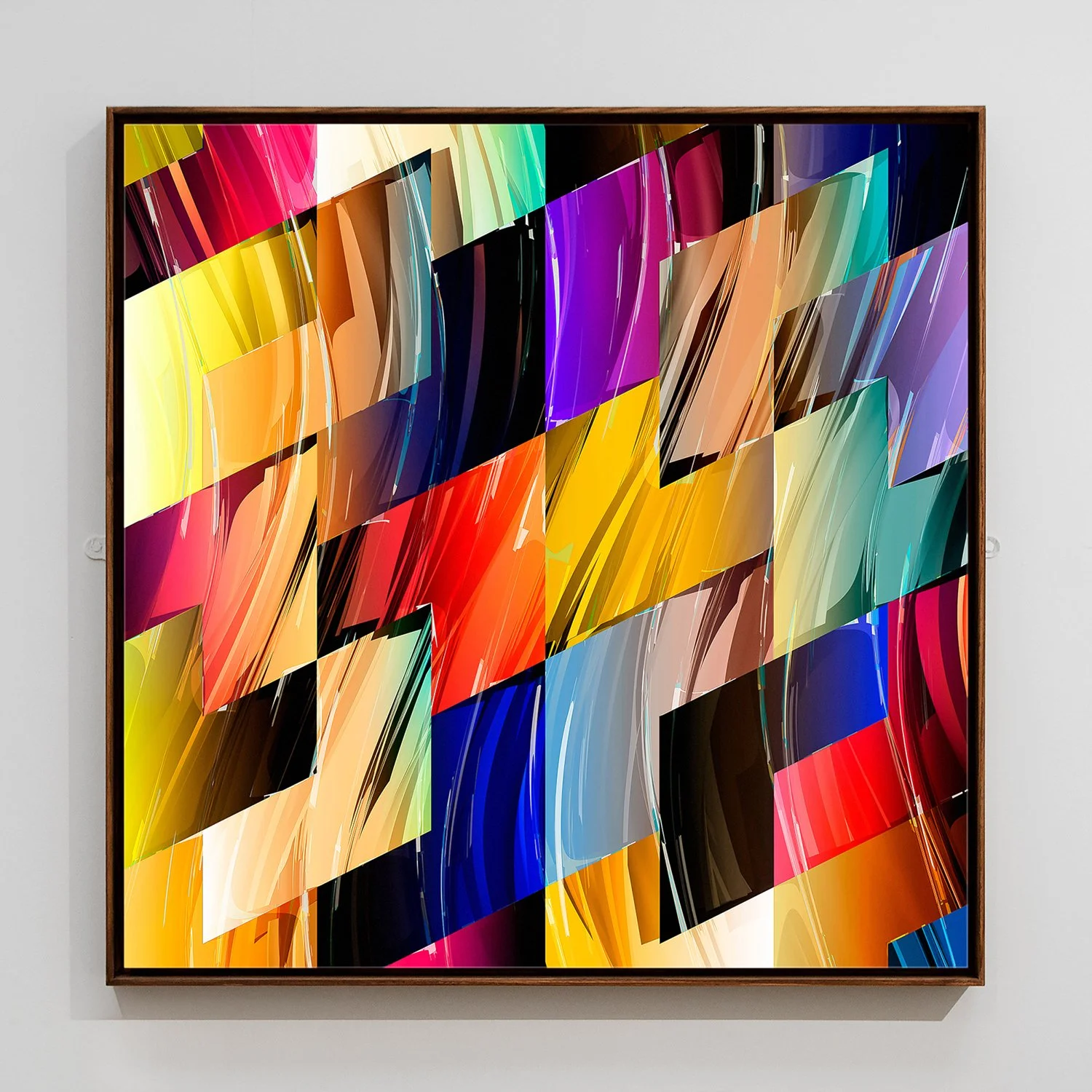
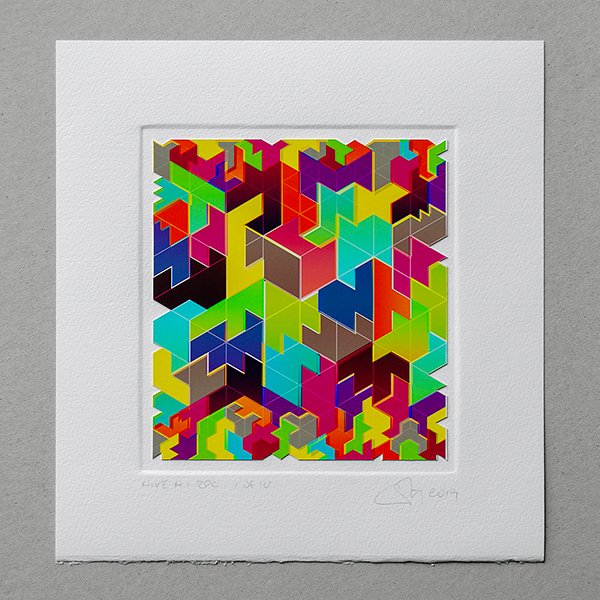
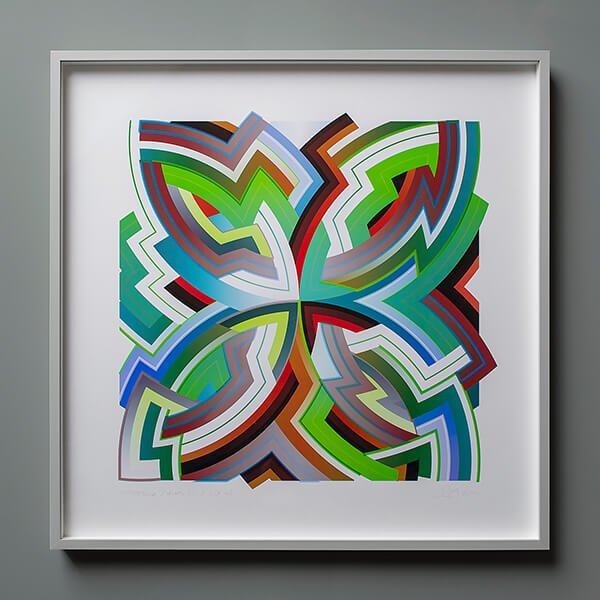
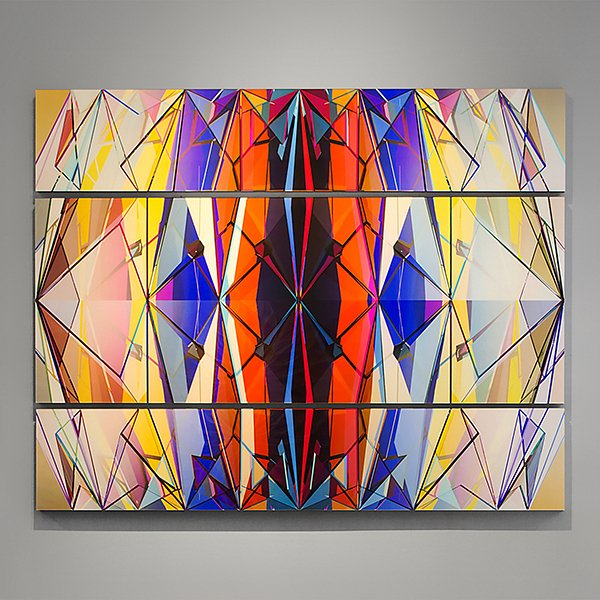
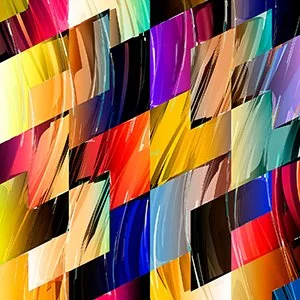
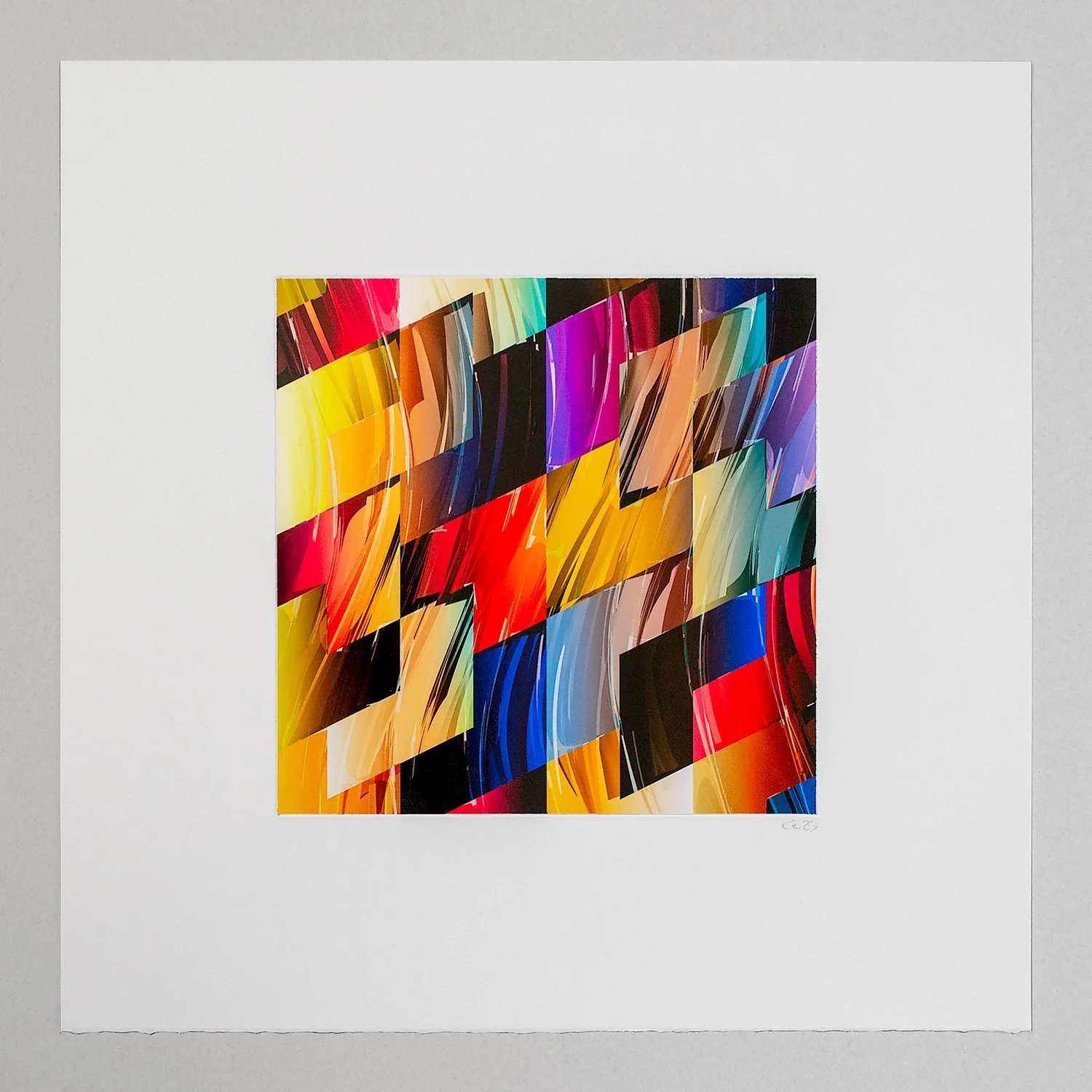
So, Phase TWO has the other form of modularity that I’m interested in, the cut and shut kind, more like my Motorik studies, in which a singular geometric form is cut down into separate components, that are then coloured and treated individually, allowing them to interact with each other across the image plane, creating unexpected interactions and flecked details that come entirely from the process of making rather than conscious placement.
I love that way of working, the flaws or glitches become a significant part of the essence of the work, hanging on the matrix or framework whilst adding a dynamism and energy that would be hard or maybe even impossible to create consciously.
There’s an issue around human intention and interaction that makes it really difficult for us to create true randomness. When planting bulbs into a border, maybe daffodils for instance, there’s a suggestion that the best way to arrange the plants is simply to throw them out in handfuls, and plant each one exactly where it lands. In this way random chance intervenes in the placement and that accentuates the beauty that we will perceive in the composition when the plants bloom.
There’s a limit to this concept of course; the happenstance needs a preconceived framework on which to exist. It’s the tension between these two states, created and random, that generates the space for the ensuing interactions to come alive.
I’m going to continue thinking about these modular studies; there’s a maximalism there that I’m drawn too, and an amount of labour that seems to validate the work in ways that are difficult to fully understand. Somewhere deep in the psyche is a sense that there has to be a significant volume of labour in order for the outcome to be perceived as worthwhile; it’s a trap of course, but one that is difficult to shrug off.
If the work were freely available to make with little or no effort, it would in many ways seem to invalidate the outcome, and this I suspect is one of the many issues and problems we are going to encounter with AI systems, and the way that technology is transforming our lives.
To some extent I’m in a somewhat unexpectedly luddite position, to want to actually continue to graft on a drawing each day, albeit on system as opposed to pen on paper. I wonder if the art world will increasingly retreat from the digital in search of both relevance with the human condition and resonance in materiality, as we experience it. We’ll find out soon enough of course…
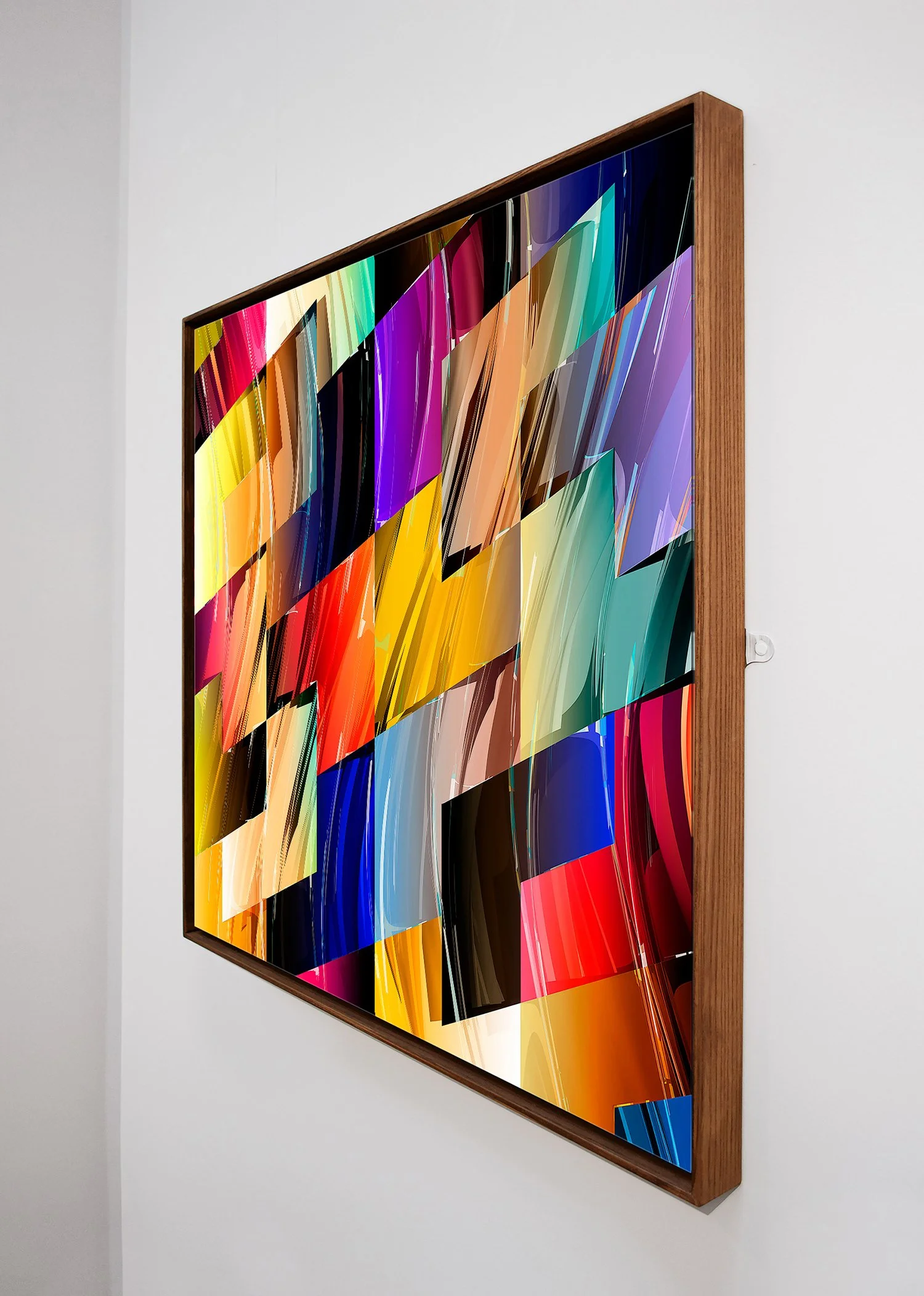
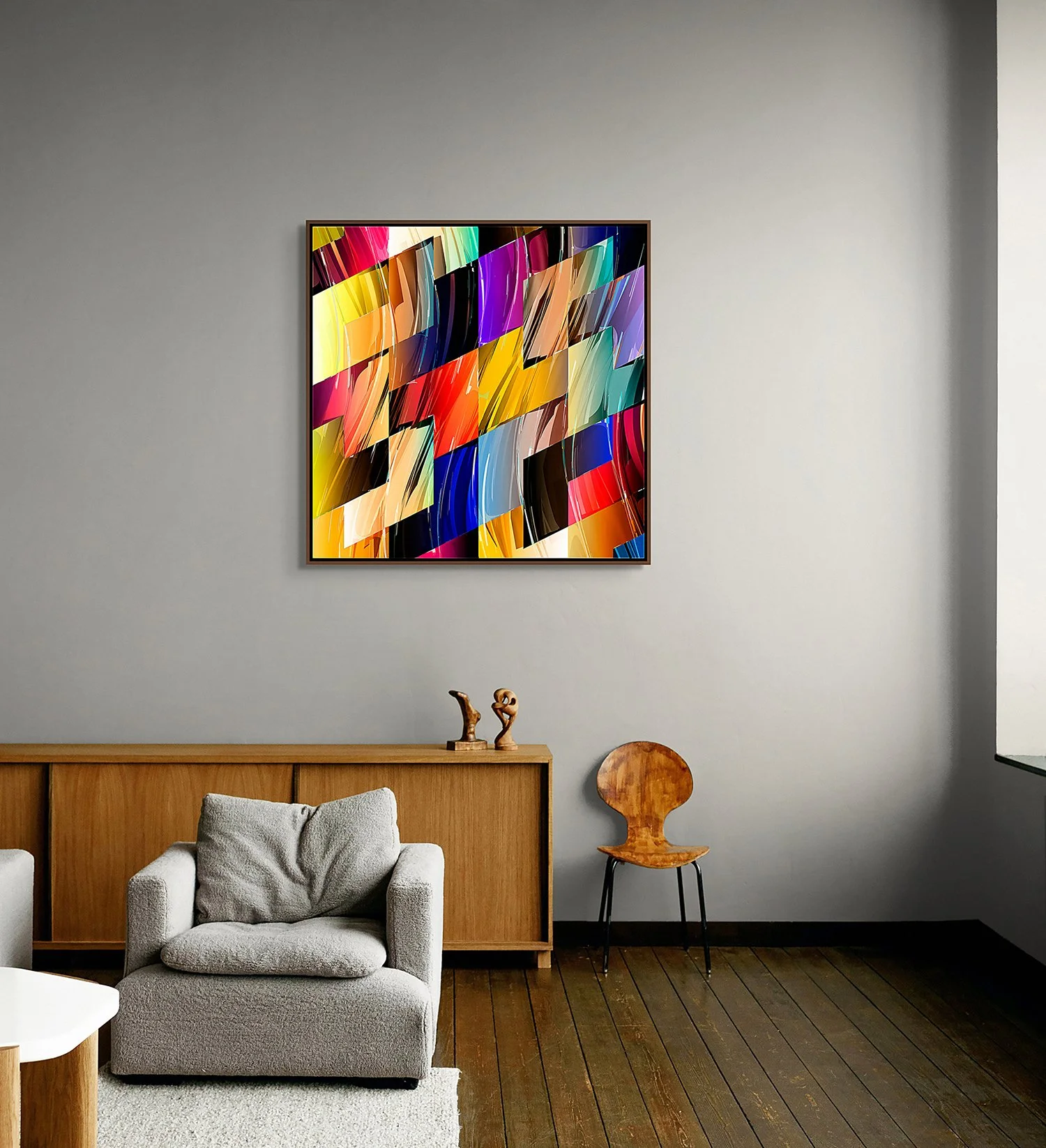
Phase TWO in situ
Price and dimensions
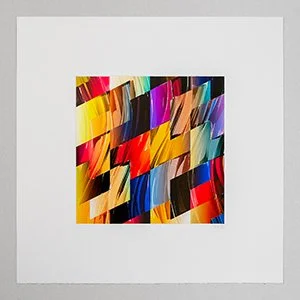
Phase TWO / hi chroma is a limited edition metallic pigment print on Titanium Gloss 300gsm fine art paper; individually signed and editioned with a unique catalogue raisonné number for guaranteed authenticity.
The work can be supplied unframed or framed and ready to hang. I tend to recommend mounting the work in a fairly minimal tulipwood frame with a Diasec mount to Plexiglass. If you’d like to discuss other framing options to suit your space please do get in touch.
.
From an edition of 24, plus 4 APs
Image size ⋅ 74cm H x 74cm W
Artwork only, ready to frame ⋅ £1,800
Mounted behind Plexiglass and fitted with a hidden subframe ⋅ £2,200
Mounted behind Plexiglass and fitted with a wooden tray frame ⋅ £2,400
.
Dimensions and framing specs can be varied on request, to suit your space.
Please do get in touch here if you’d like to discuss possibilities >
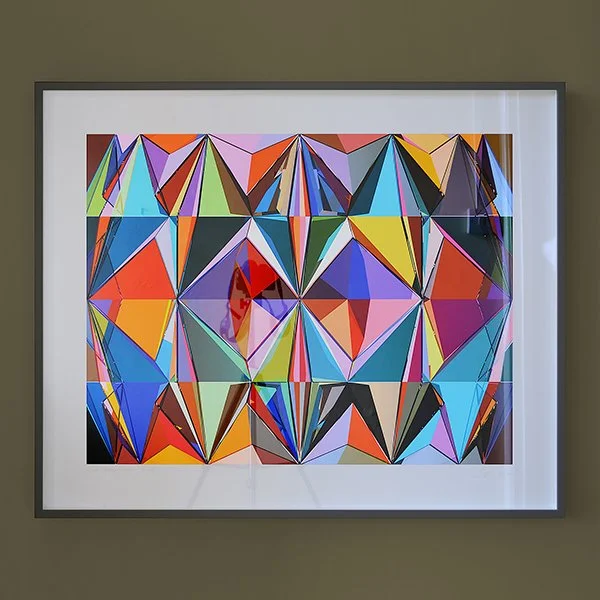
Associated works